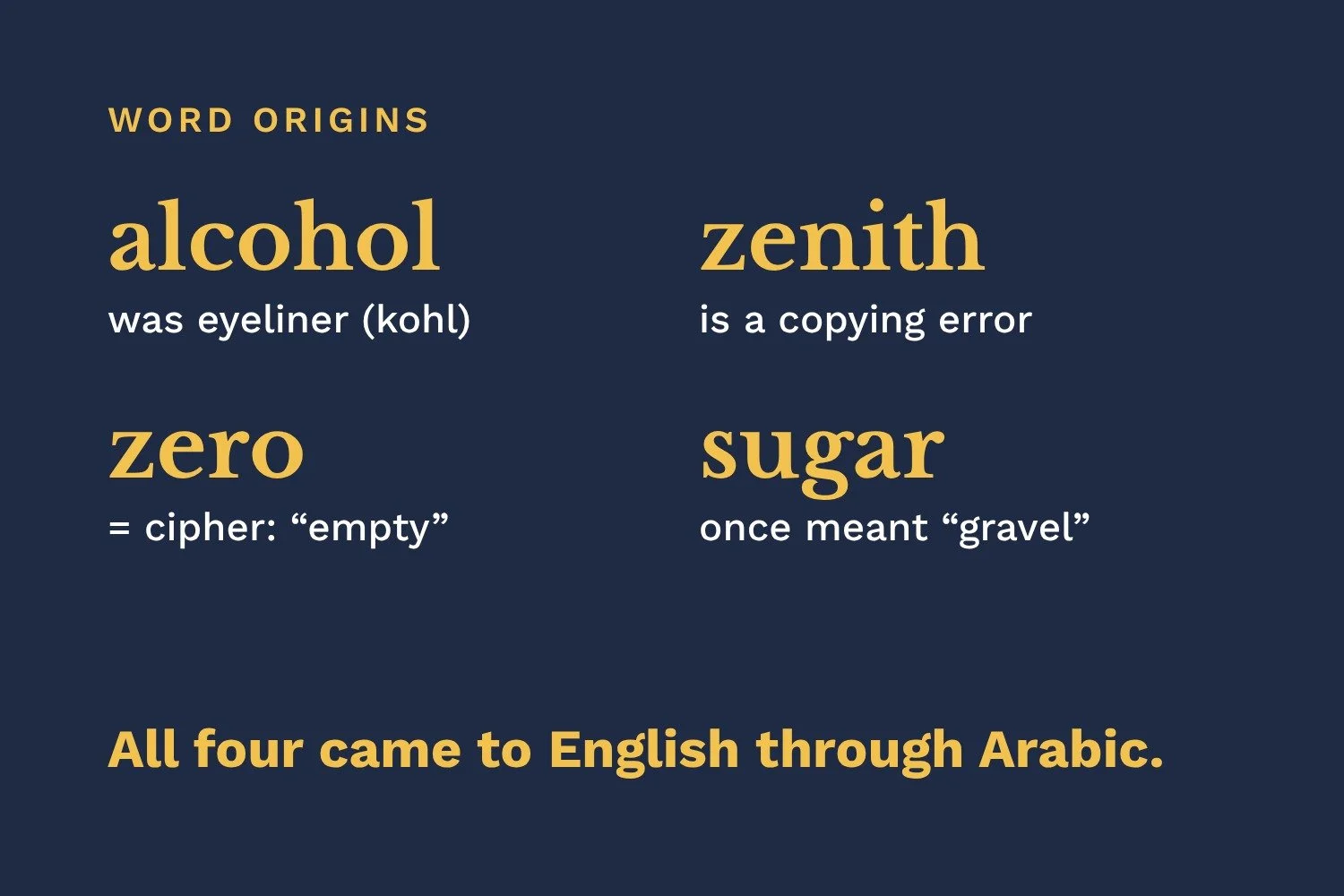
Eyeliner, Gravel and a Typo
Alcohol was eyeliner. Zenith is a scribe’s typo. Zero and cipher are the same word, and sugar once meant gravel. Here’s how much of English travelled through Arabic, and what it says about where words really come from.
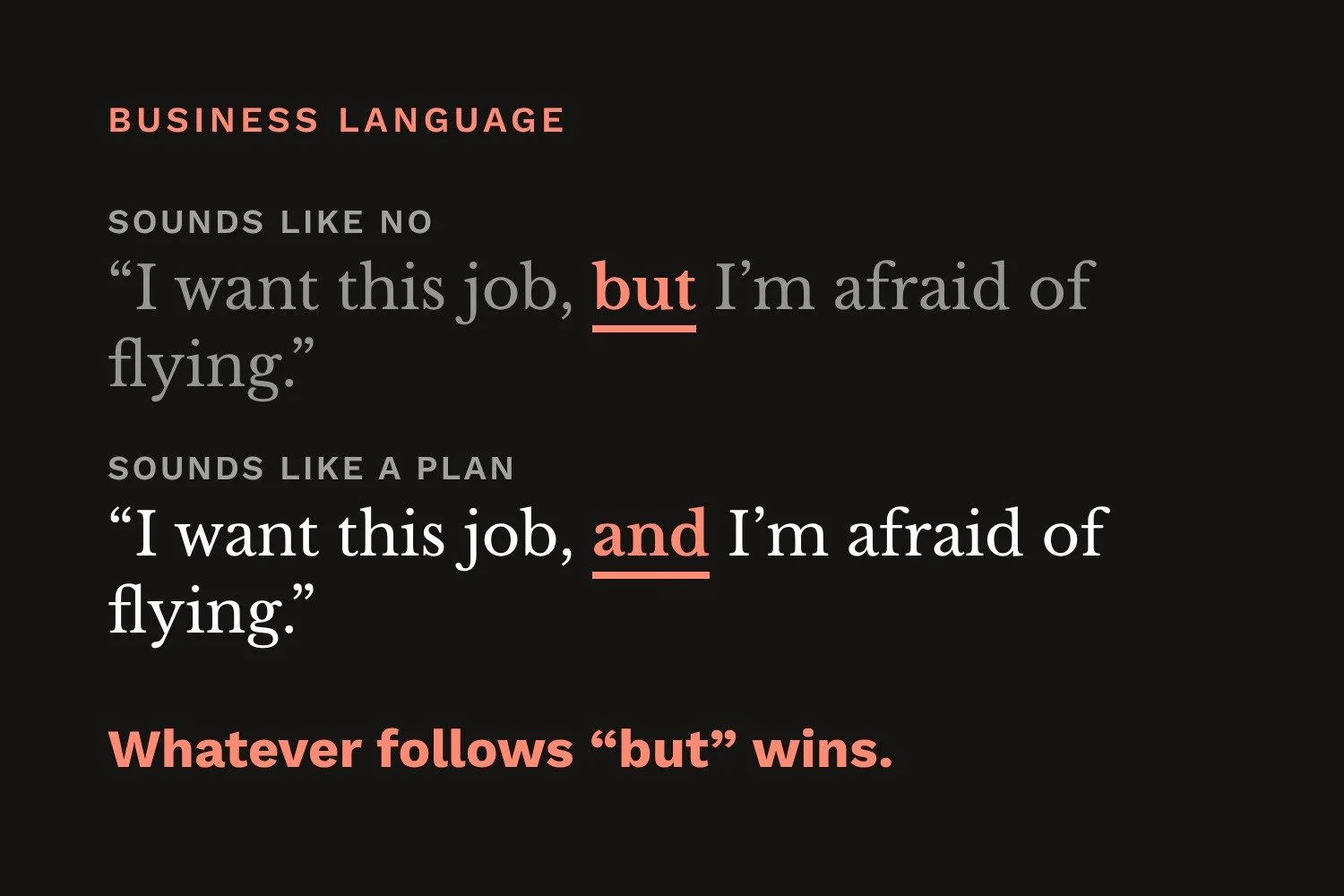
Everything Before the But
“I like it, but…” and nobody hears the first half. Whatever follows but wins, and the word has been doing that since Old English. Here’s what swapping but for and does to decisions, feedback and meetings.
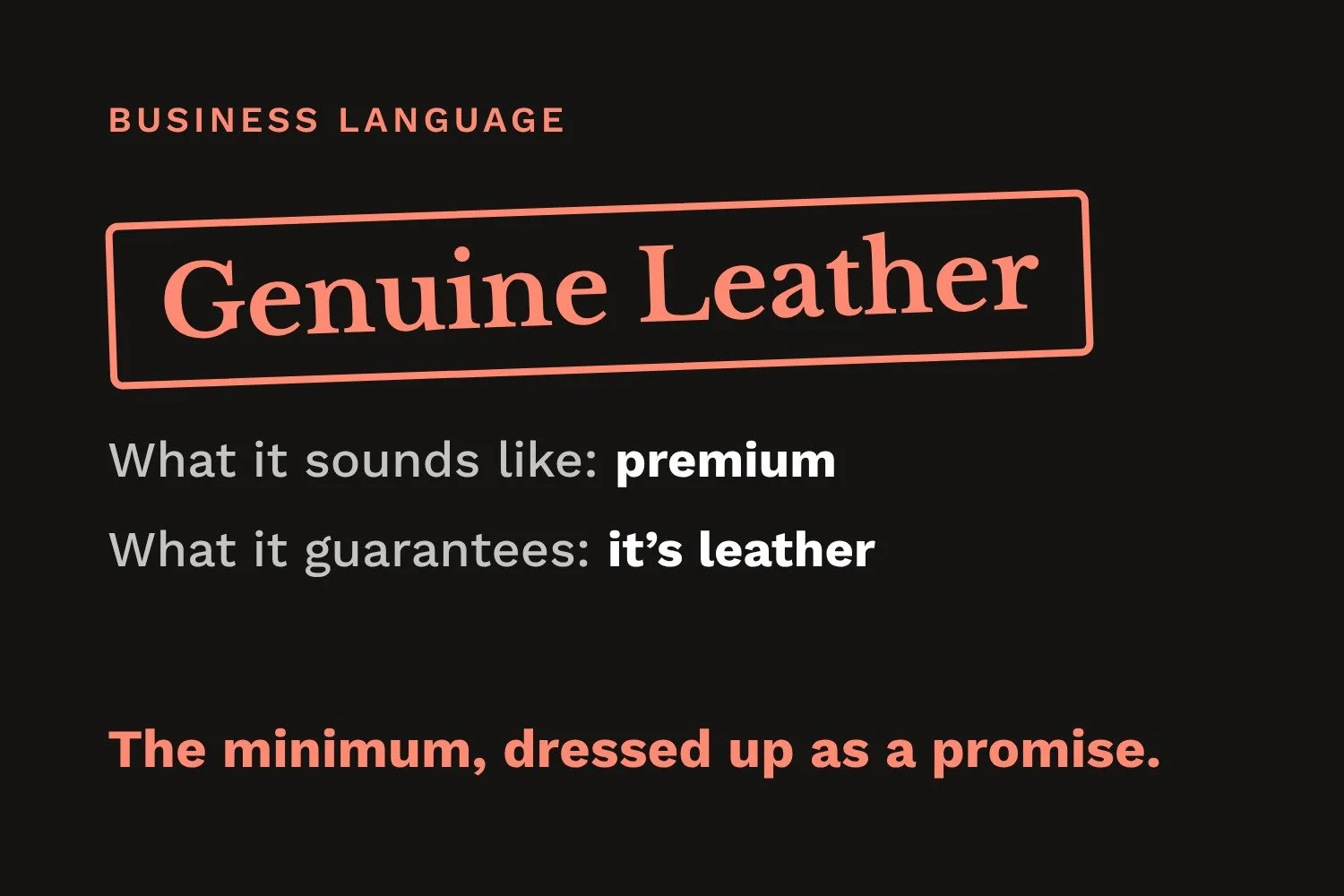
Genuine Isn’t a Grade
“Genuine leather” sounds like a mark of quality. It just means the product is leather, from the finest full grain to the cheapest coated split. Here’s what that stamp is really promising, and the business words that work the same way.
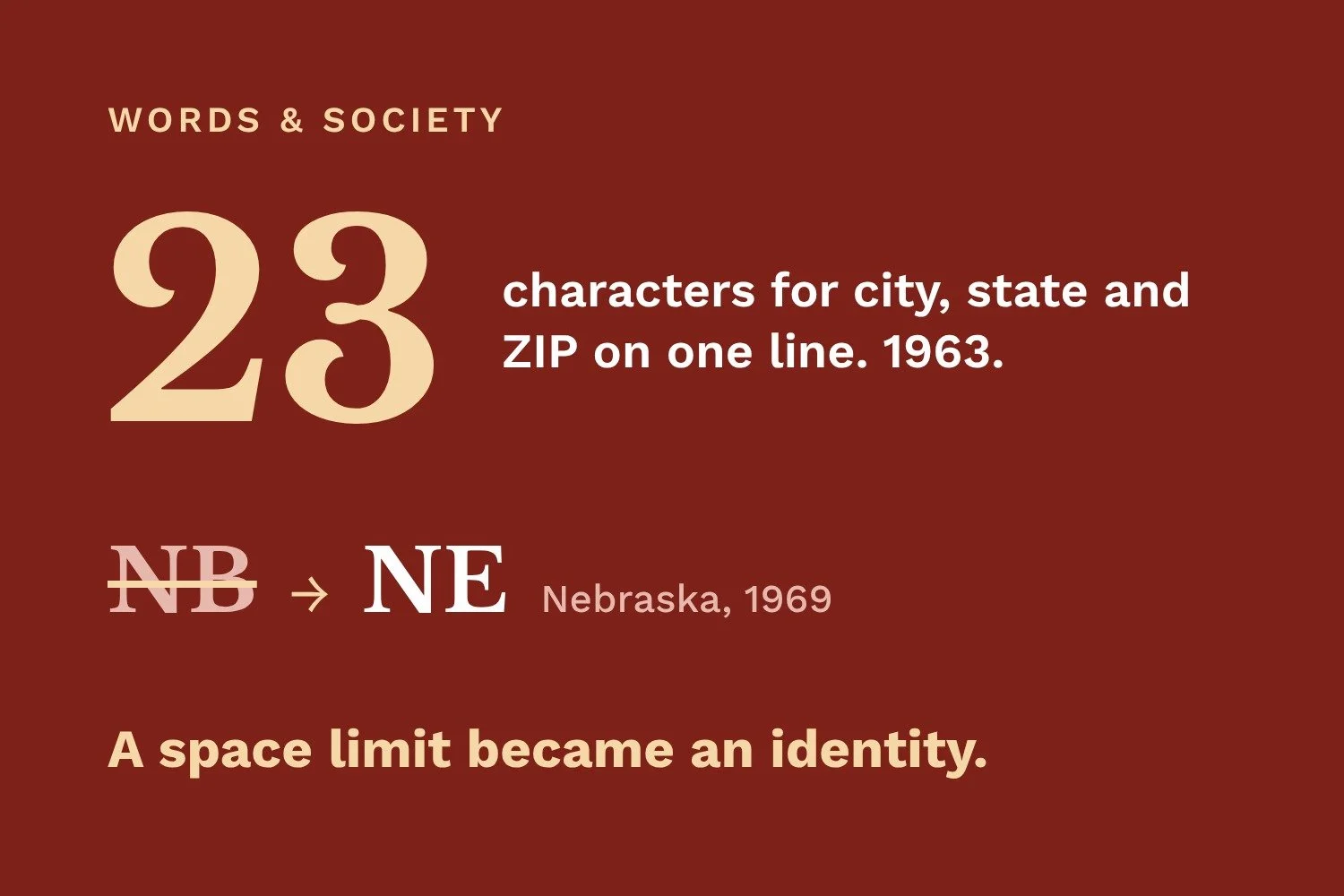
Two Letters, Twenty-Three Characters
CA, TX and NY feel ancient, but they date from 1963. The Post Office needed city, state and ZIP to fit in 23 characters, so it invented two-letter codes. Here’s how a space limit became an identity, and why your own quick fixes might last longer than you think.
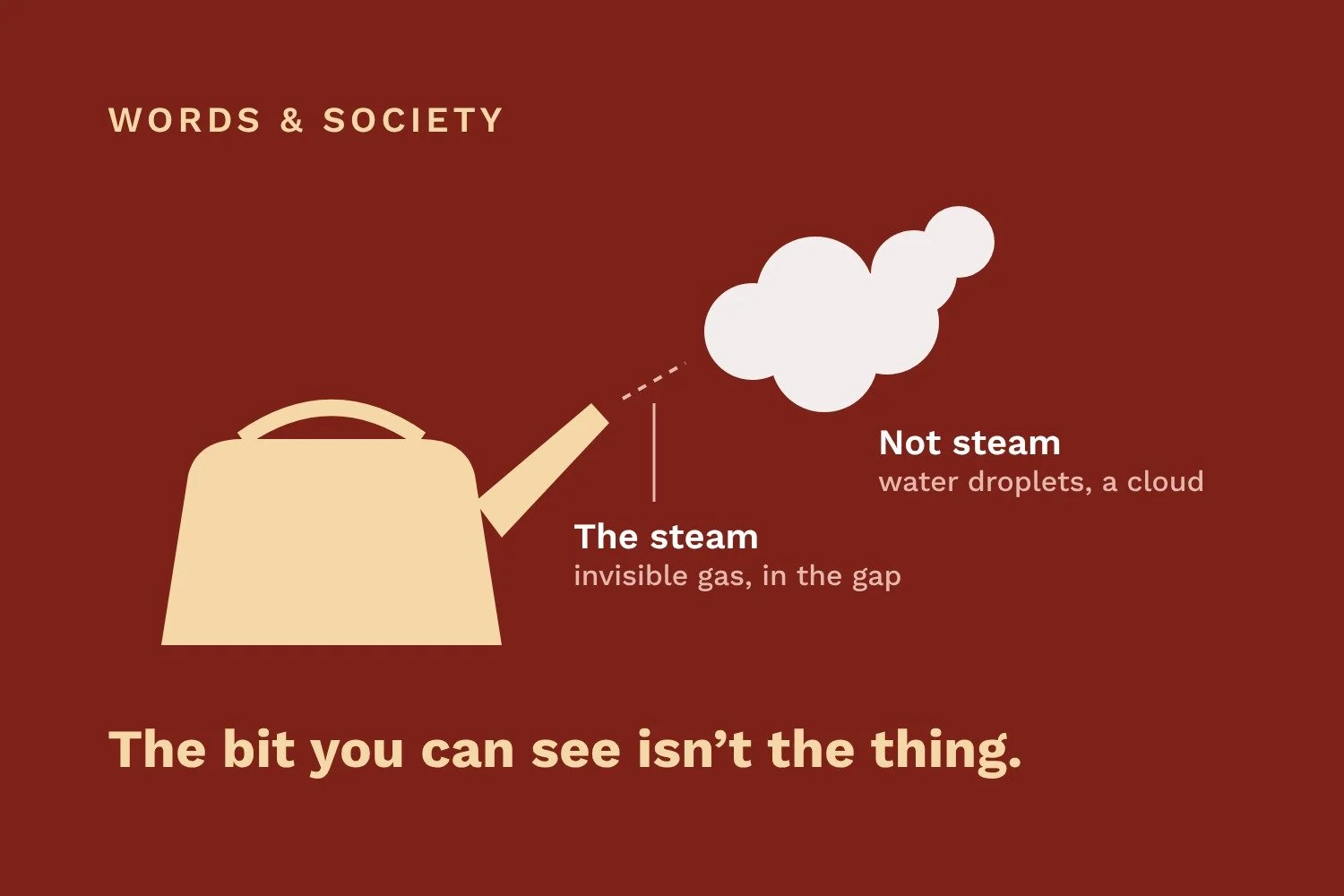
You’ve Never Seen Steam
That white plume from your kettle isn’t steam. Real steam is invisible; what you see is a tiny cloud of water droplets. Here’s what that teaches about words with two meanings, and why organisations so often measure the plume instead of the steam.
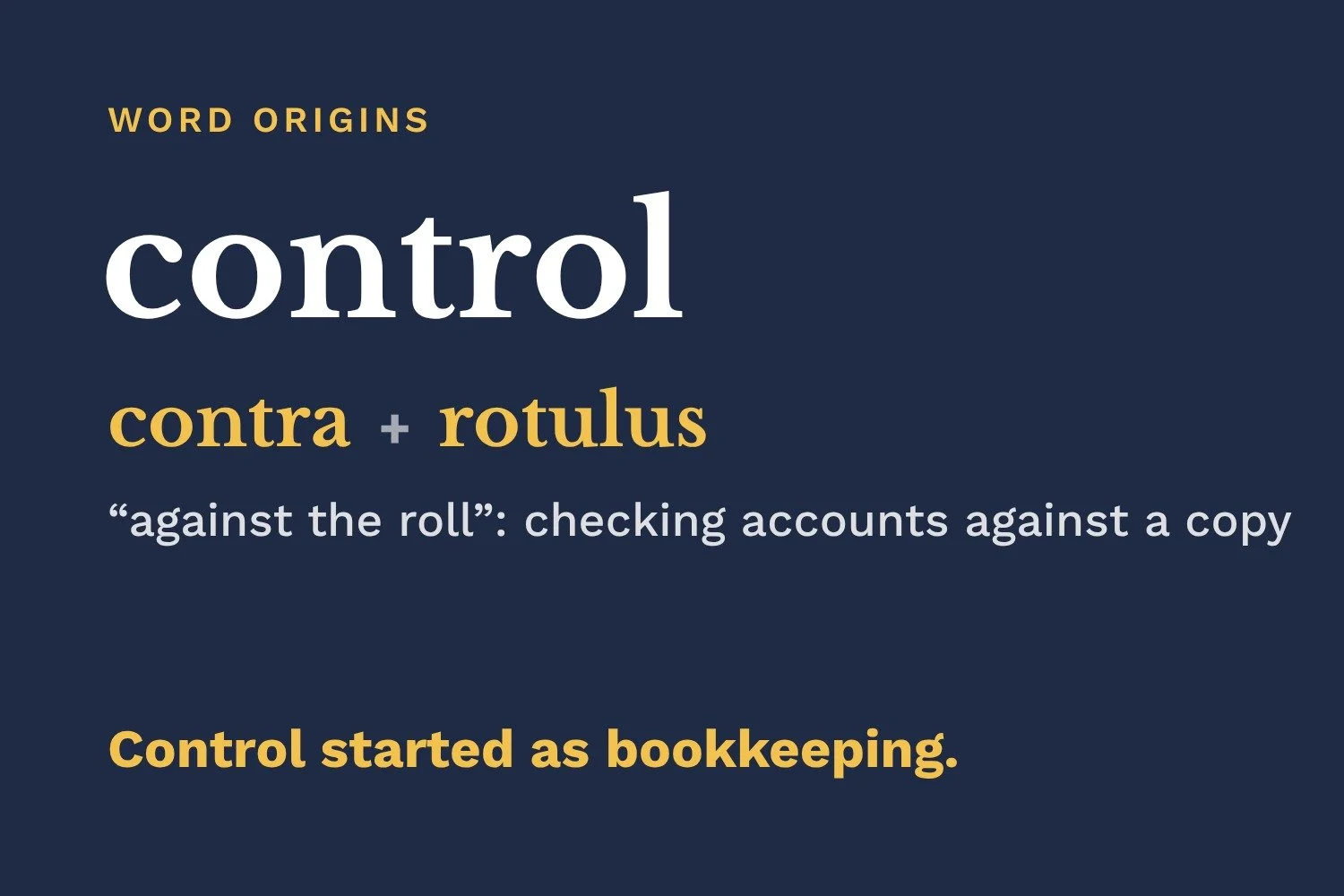
Control Was Never About Command
“Control” began as bookkeeping: checking accounts against a duplicate roll. Command came later. Here’s what the original meaning says about leaders who want more control, and why the word “role” belongs to the same family.
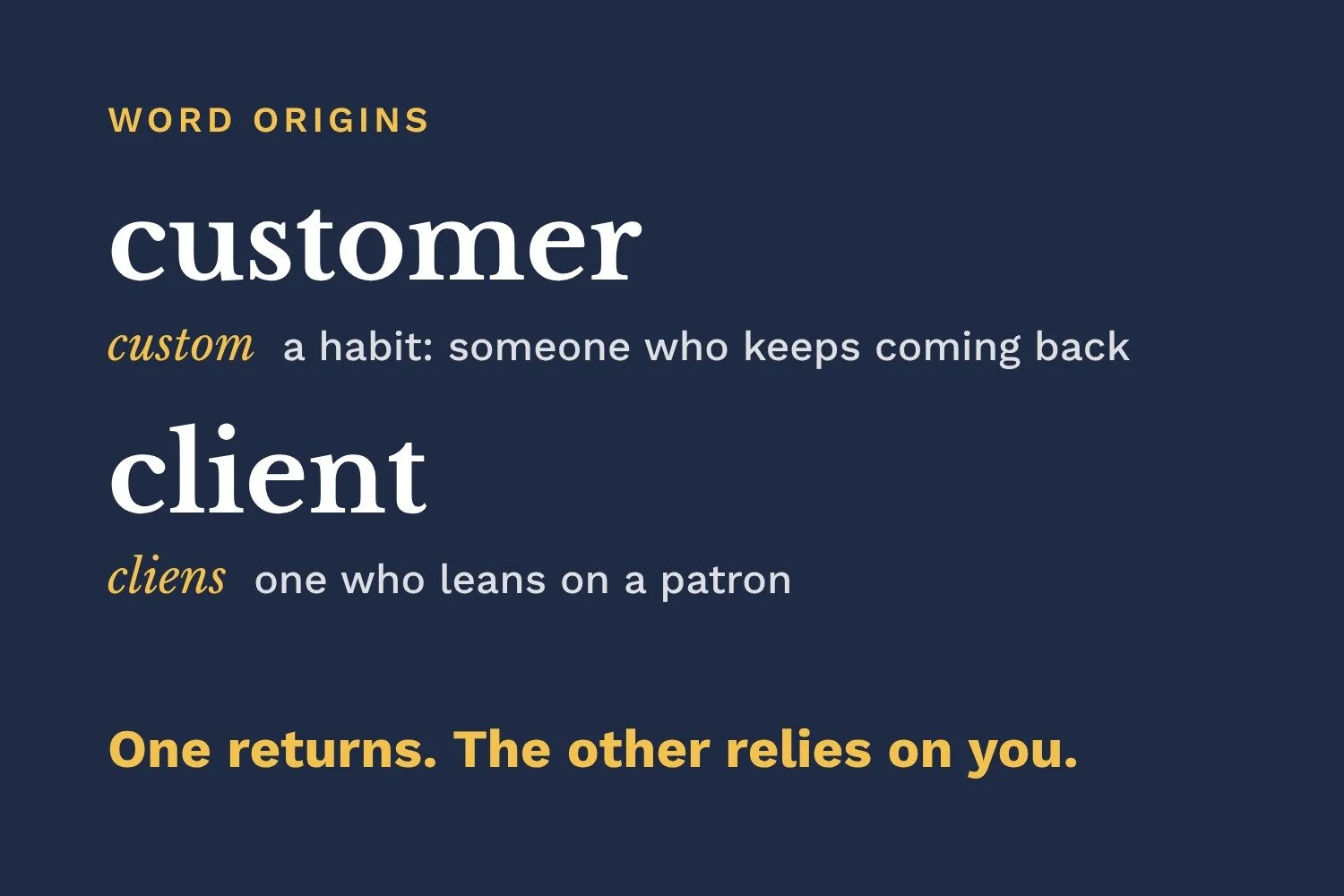
Customer or Client?
A customer is someone with a habit. A client, from the Latin cliens, is someone who leans on you. Here’s what the history of the two words says about the relationship you’re really offering.
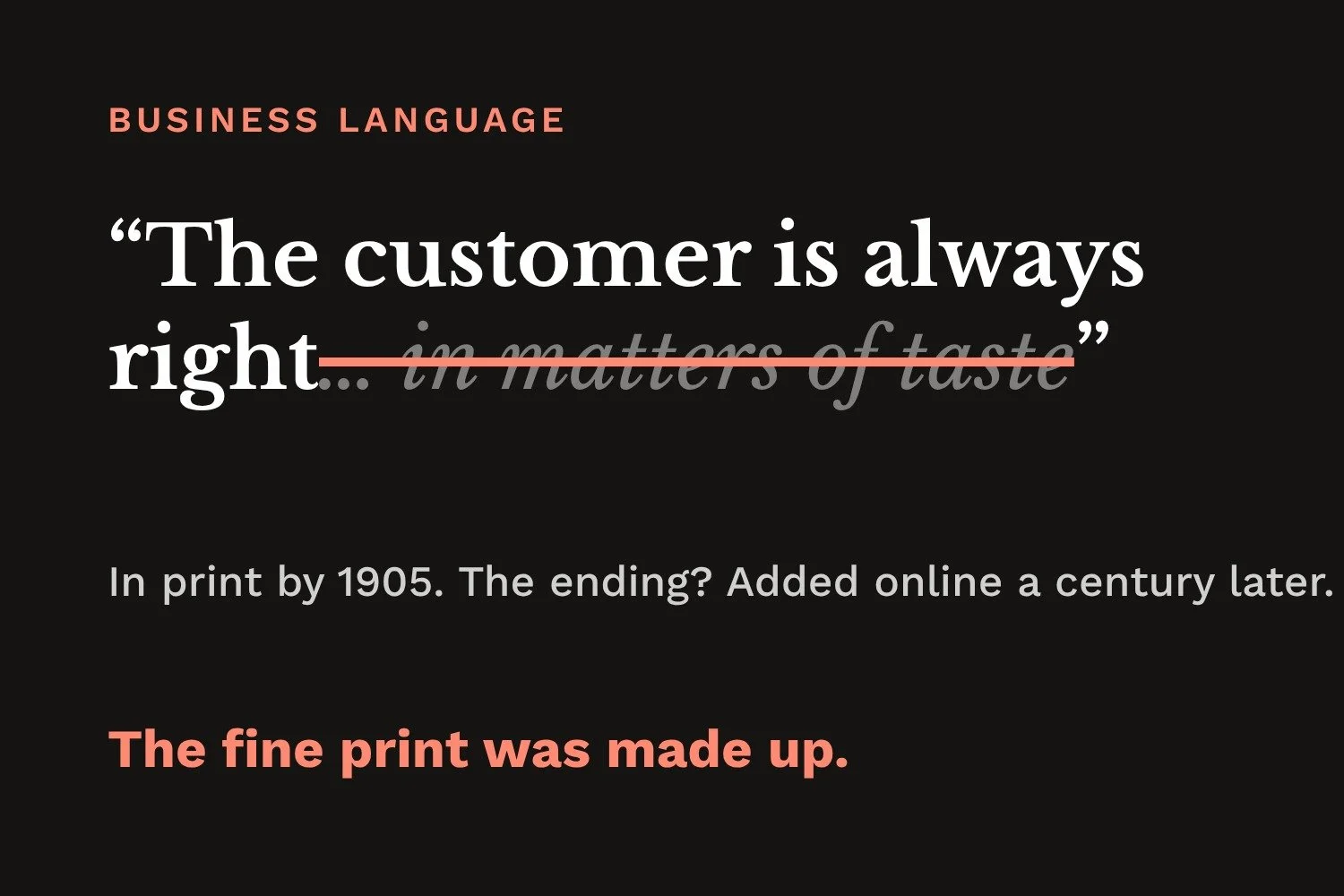
The Customer Is Always Right (and Other Things Nobody Said)
No, “the customer is always right” didn’t originally end with “in matters of taste”. That ending was invented online a century later. Here’s where the slogan really came from, what it actually meant, and why we keep rewriting phrases we’ve outgrown.
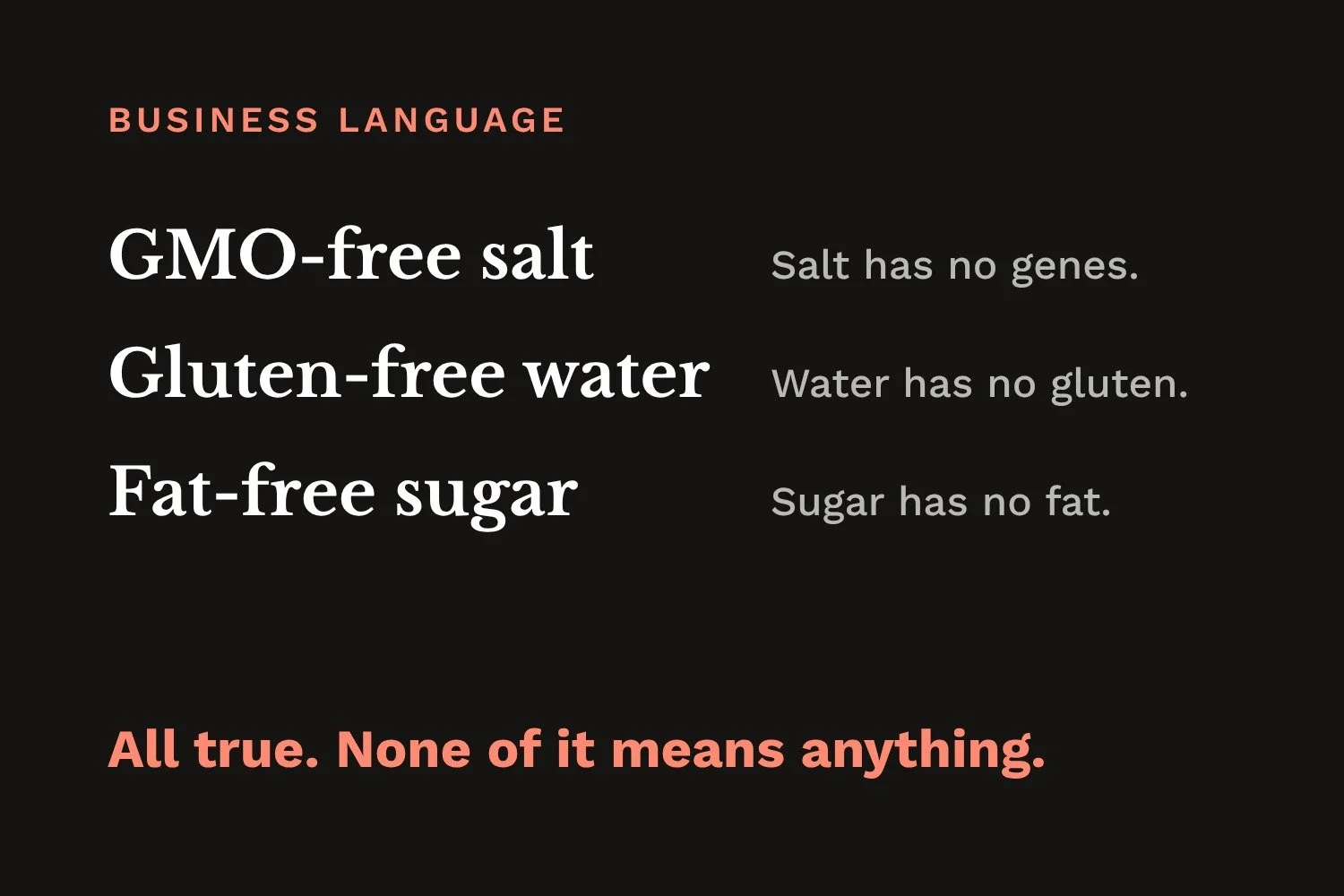
Gluten-Free Water
GMO-free salt. Gluten-free water. Fat-free sugar. Every word is true, and none of it means anything. Here’s why marketers love claims that tell you nothing, what the ACCC thinks of them, and how to tell when your own business is doing it.
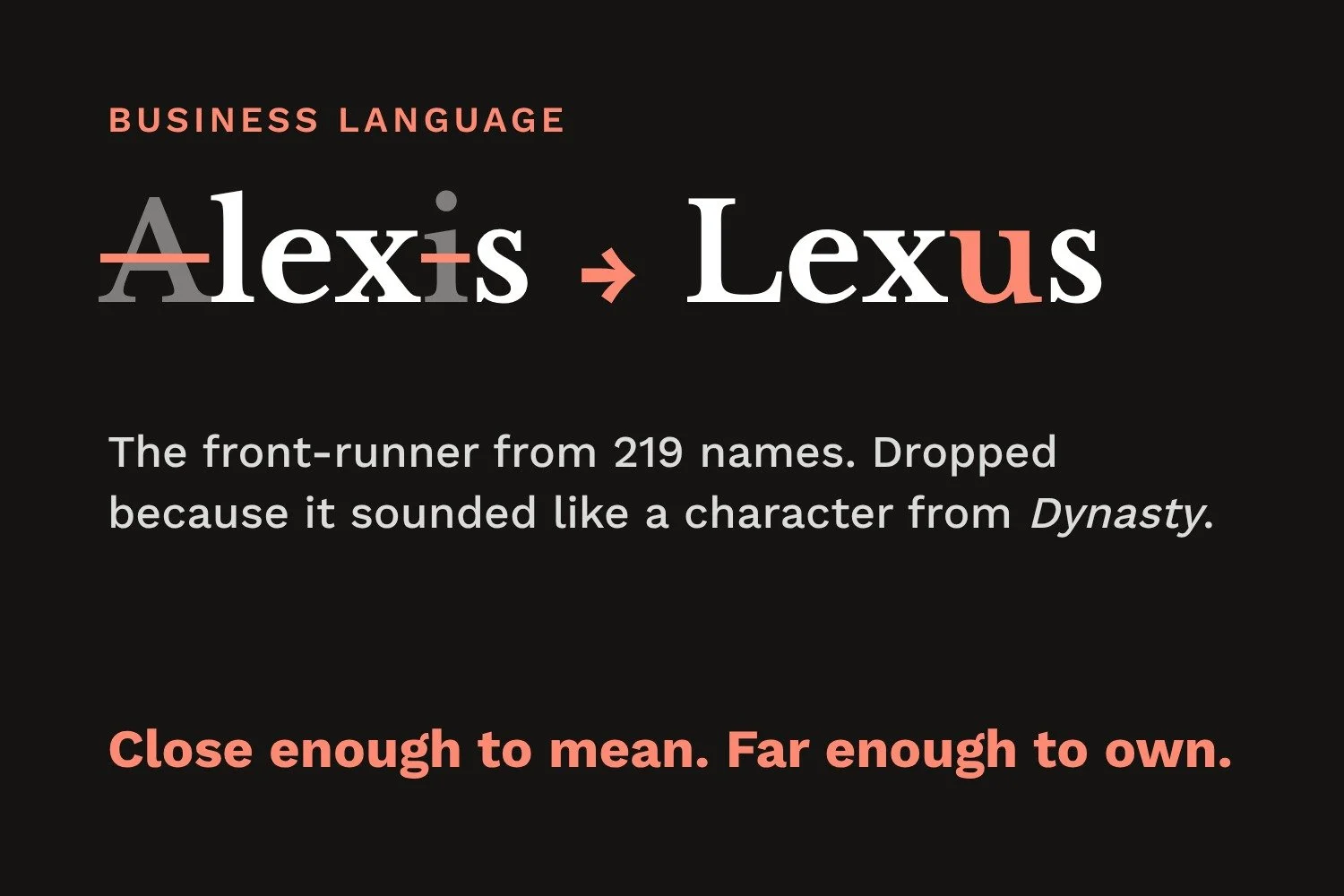
Why It’s Not Called Alexis
Toyota’s luxury car was nearly called Alexis, until someone realised it sounded like the villain from Dynasty. Dropping one letter and changing another gave us Lexus. Here’s what that teaches about naming, and why the “Luxury Exports to the US” story isn’t true.
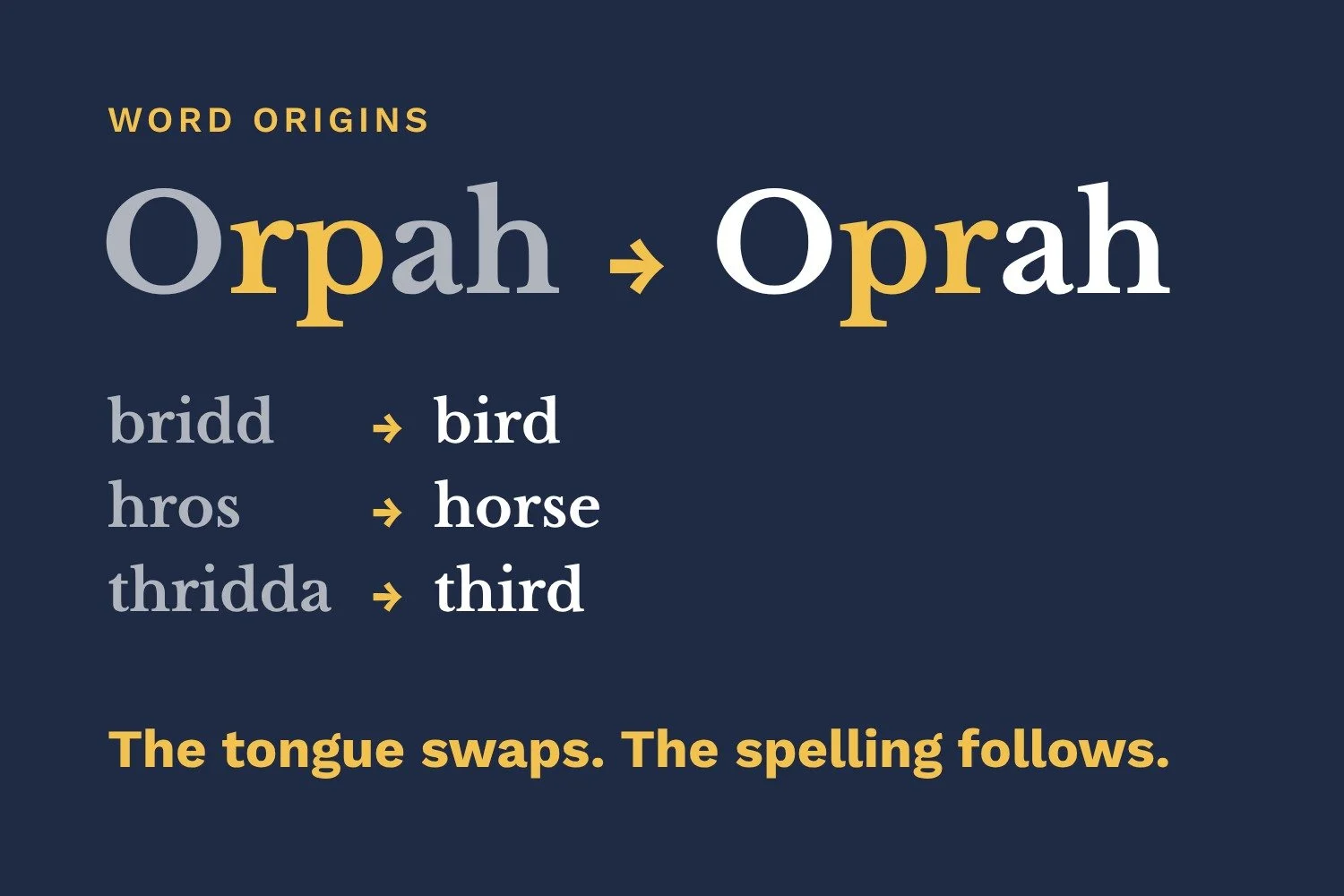
Oprah Was Spelled Right
Oprah Winfrey’s birth certificate says Orpah, spelled correctly after a woman in the Book of Ruth. People kept swapping the letters when they said it, and the new version won. It’s the same thing that gave us bird, horse and third, and why “aks” is older than you think.

Could Anyone Have Signed This?
Cover the signature on your last company-wide email. Could anyone tell it was yours? If not, here's why your message isn't landing, and four ways to put your voice back.

Master of Ceremonies
The first Master of the Ceremonies was hired in 1603 to stop diplomatic incidents at the English court. Four hundred years later, the job's the same: make everyone else look good. Here's how.

Hypocrite Means Actor
In ancient Greek, a hypocrite was simply an actor. English kept the word and changed the job description. Here's what that tells leaders who think they need to play a part.

The Whole Law on One Foot
A man once asked the teacher Hillel to explain the whole law while standing on one foot. Hillel managed it in one sentence. Here's why the golden rule beats the Ten Commandments as communication, and what your organisation could learn from it.

You Are Not Left-Brained
Left brain logical, right brain creative? A 2013 study of more than a thousand brain scans found no left-brained or right-brained people. Here's where the myth came from, and why labels like it do damage at work.

The Learning Styles Myth
Are you a visual learner? Probably not, because there's no good evidence that learning styles exist the way we think. Here's what the research says, and why the myth won't die.

Grief Bacon
German has a word for the weight you gain from emotional eating: Kummerspeck, grief bacon. Some languages don't even have words for yes, no, left or right. Here's why no word means exactly the same thing to everyone, even in your own office.

Enron’s Values Were Excellent
Respect, Integrity, Communication, Excellence. They're good values, and they belonged to Enron. If your company's values could be swapped with theirs, here's the test, and the fix.

The Pinto That Never Went to Brazil
The Ford Pinto supposedly flopped in Brazil because of an unfortunate slang word. It never went there. But the Pinto did have a real language problem, and it's the one most organisations still have.