
Off the Track and Into the Pantry
Australia’s favourite biscuit is named after an American racehorse. Ross Arnott watched Tim Tam win the 1958 Kentucky Derby and saved the name for six years. Here’s the story, and why names that are fun to say beat names that explain themselves.
News From Nowhere
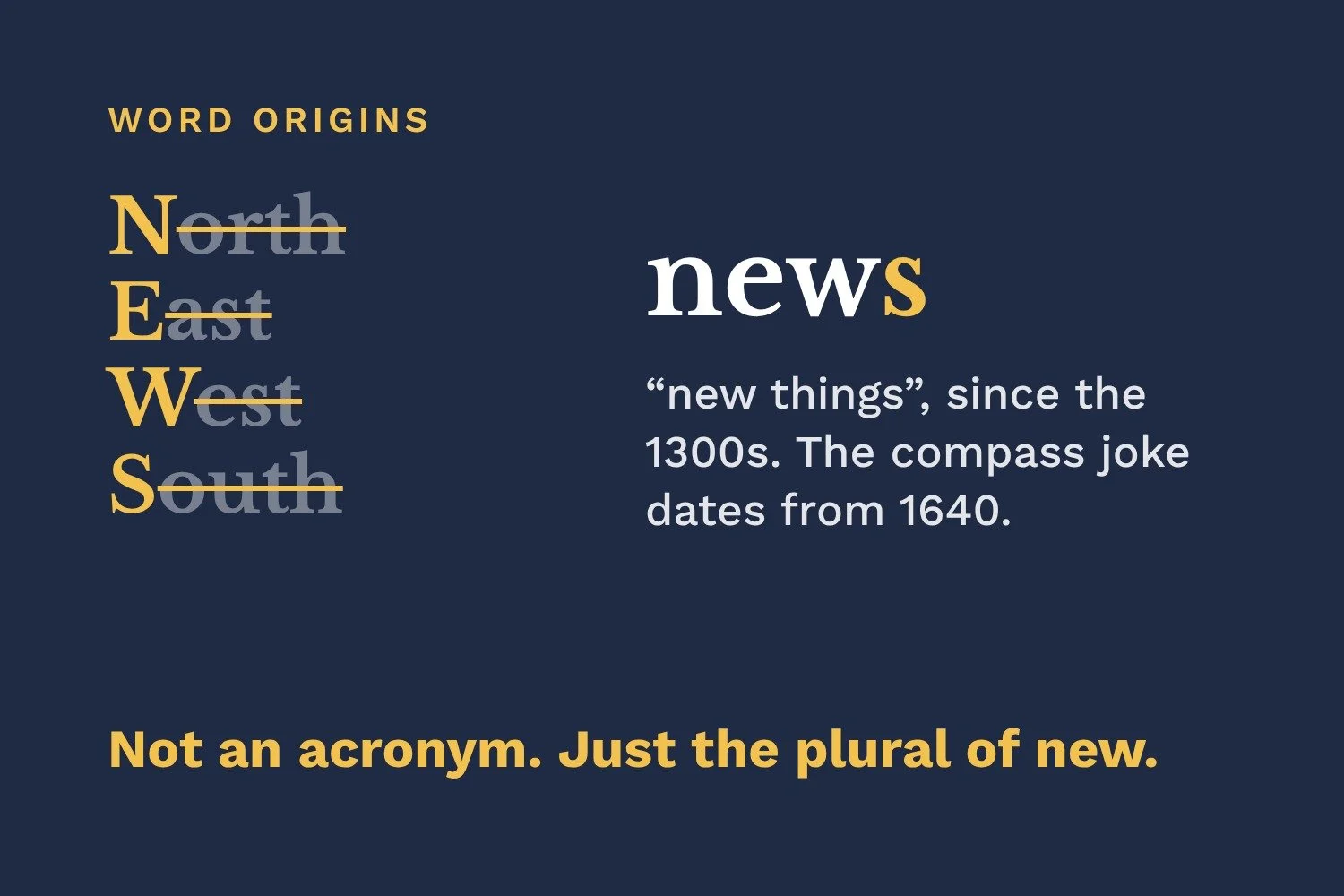
No, news doesn’t stand for North, East, West and South. That joke dates from 1640. It’s simply the plural of new. Here’s the truth, along with posh, golf and SOS, and why backronyms make businesses look less clever than they think.
Thank Blossom
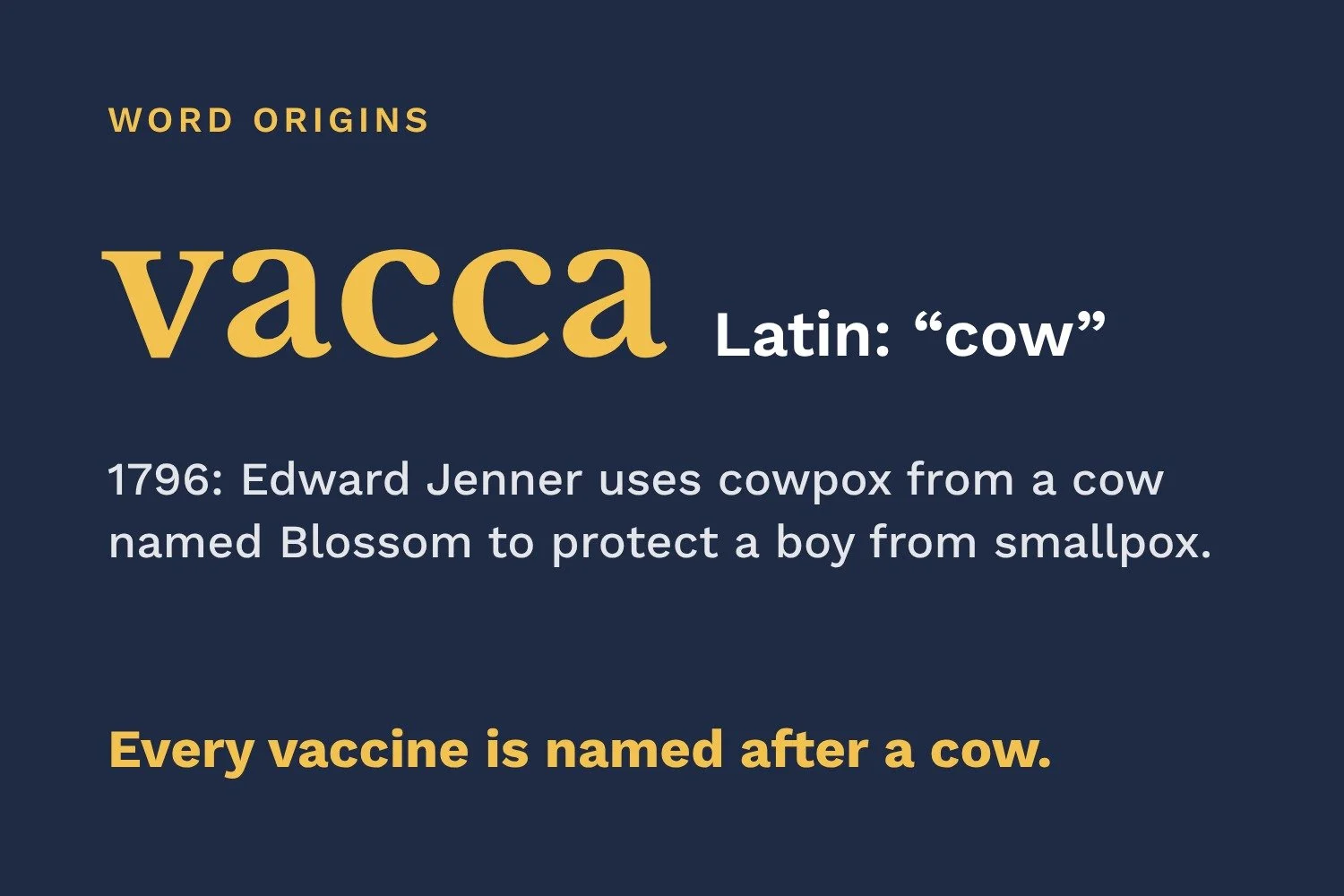
Vaccine comes from vacca, Latin for cow. In 1796, Edward Jenner used cowpox from a cow called Blossom to protect a boy from smallpox. Every vaccine since has carried her name. Here’s how one success named a whole category.
Blame It on Pan
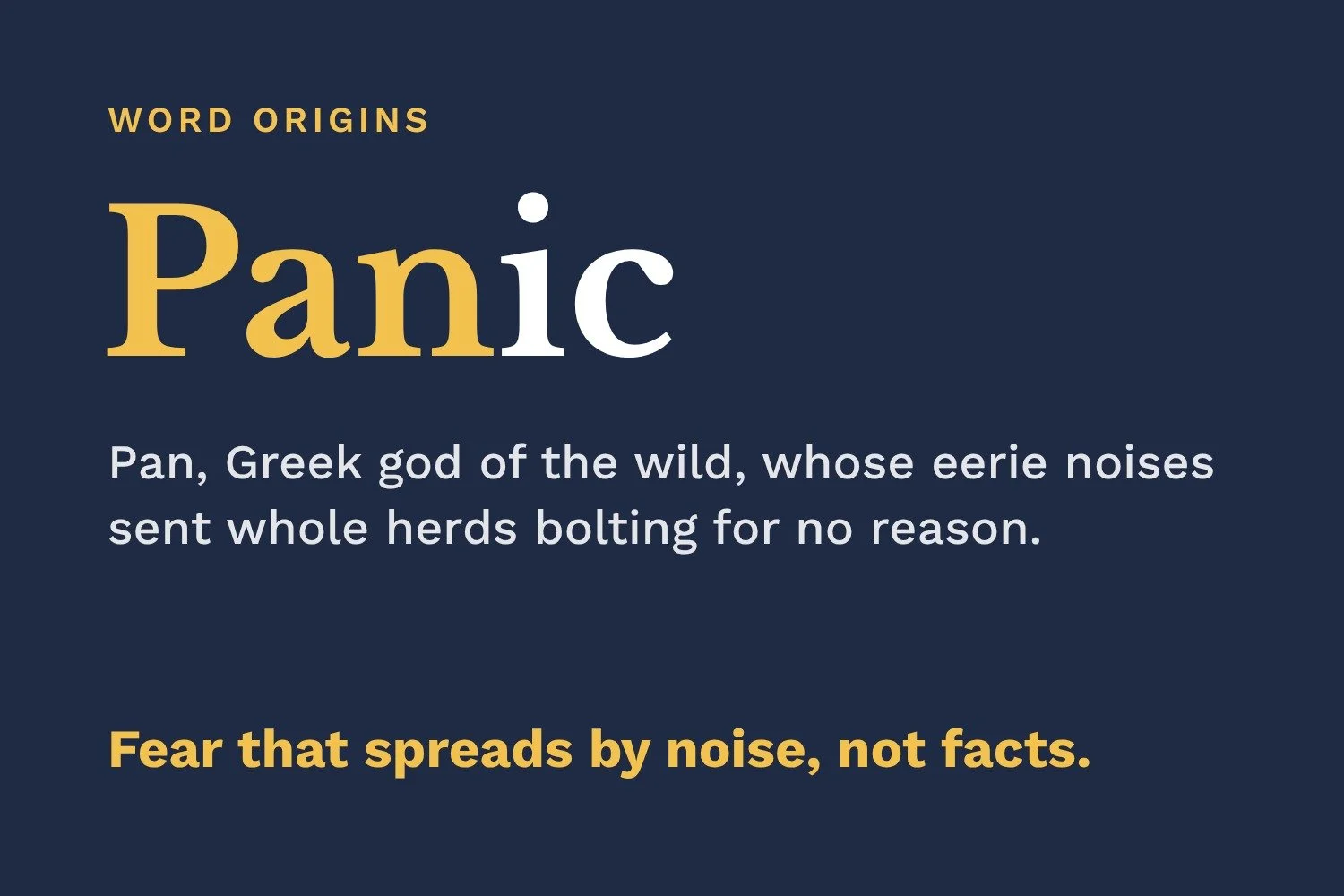
Before toilet paper was ever panic-bought, the Greeks blamed Pan. The goat-footed god’s eerie noises sent whole herds bolting for no reason. Here’s what the origin of “panic” teaches about crowds, markets and leading through a crisis.
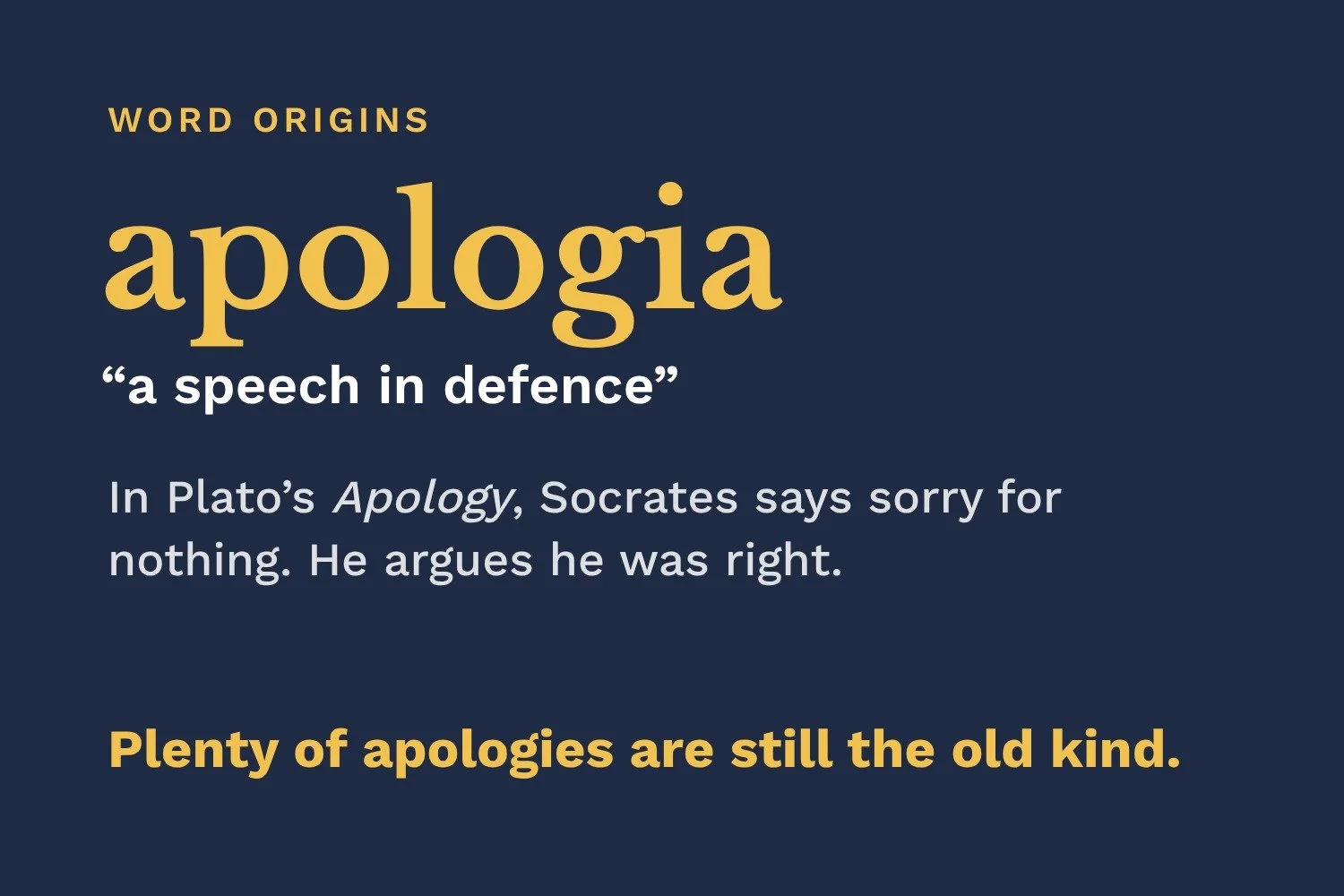
Socrates Never Said Sorry
In Plato’s Apology, Socrates doesn’t say sorry once. Apologia meant a speech in defence, and plenty of modern apologies still are. Here’s how to tell the difference, and what a real apology does.
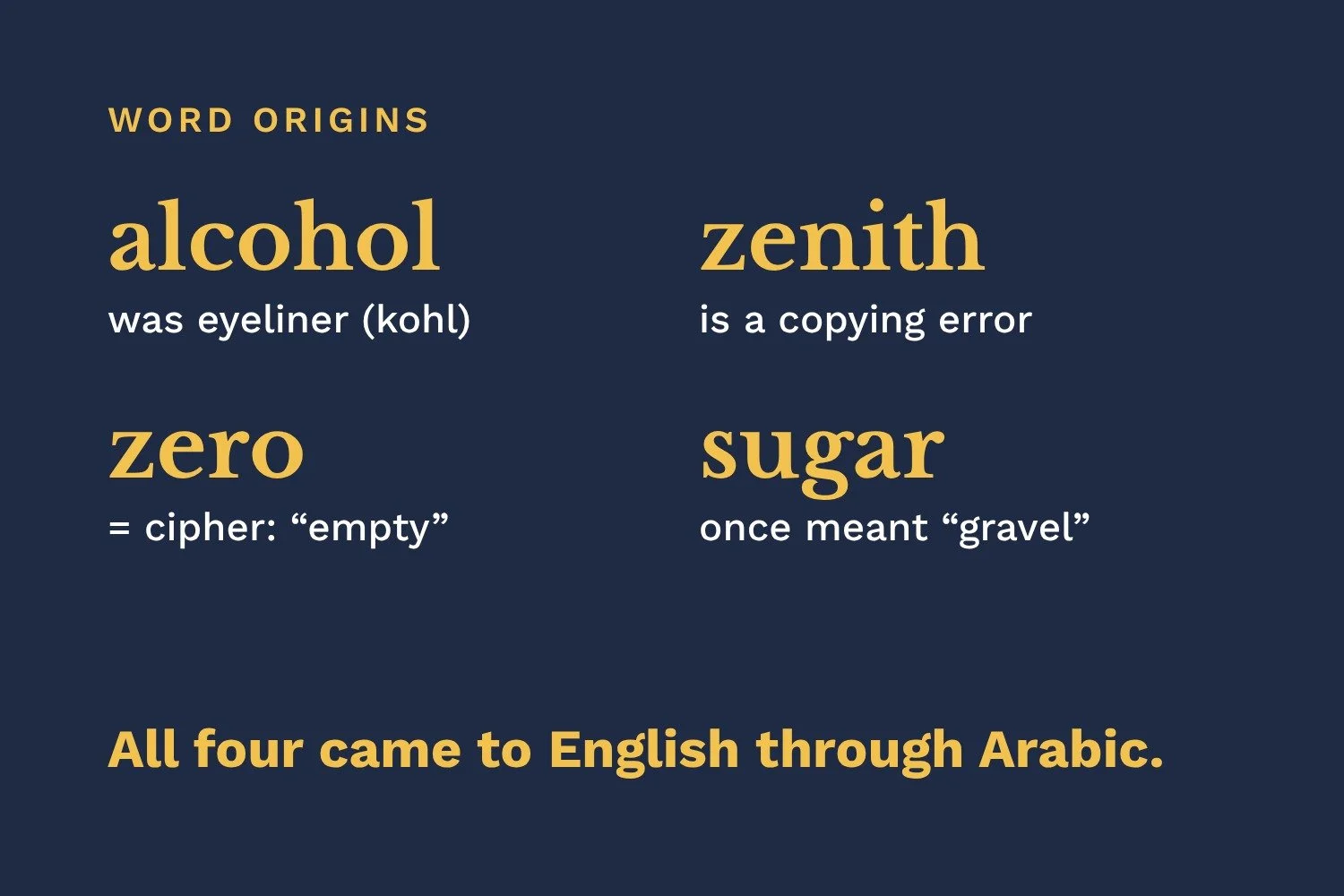
Eyeliner, Gravel and a Typo
Alcohol was eyeliner. Zenith is a scribe’s typo. Zero and cipher are the same word, and sugar once meant gravel. Here’s how much of English travelled through Arabic, and what it says about where words really come from.
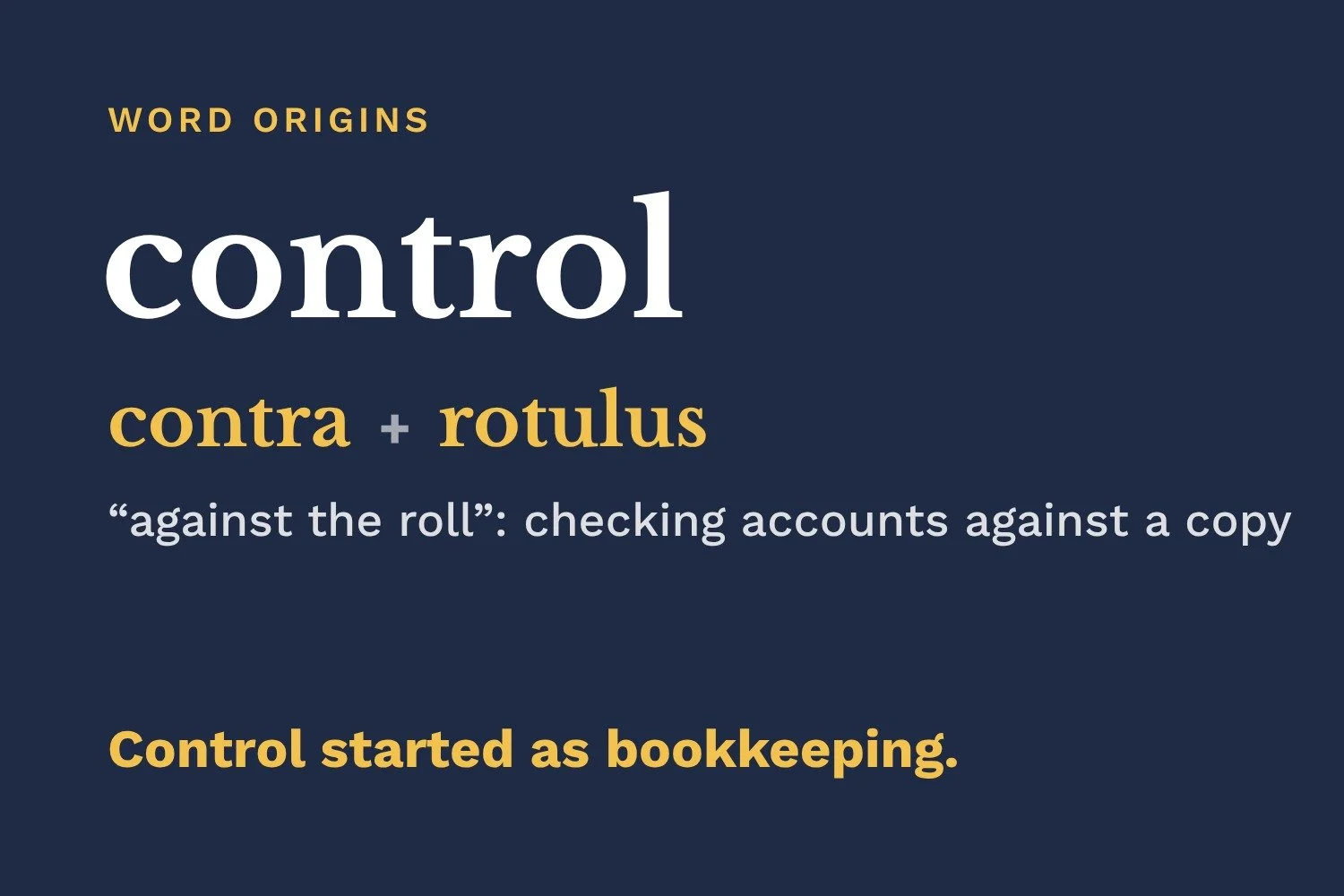
Control Was Never About Command
“Control” began as bookkeeping: checking accounts against a duplicate roll. Command came later. Here’s what the original meaning says about leaders who want more control, and why the word “role” belongs to the same family.
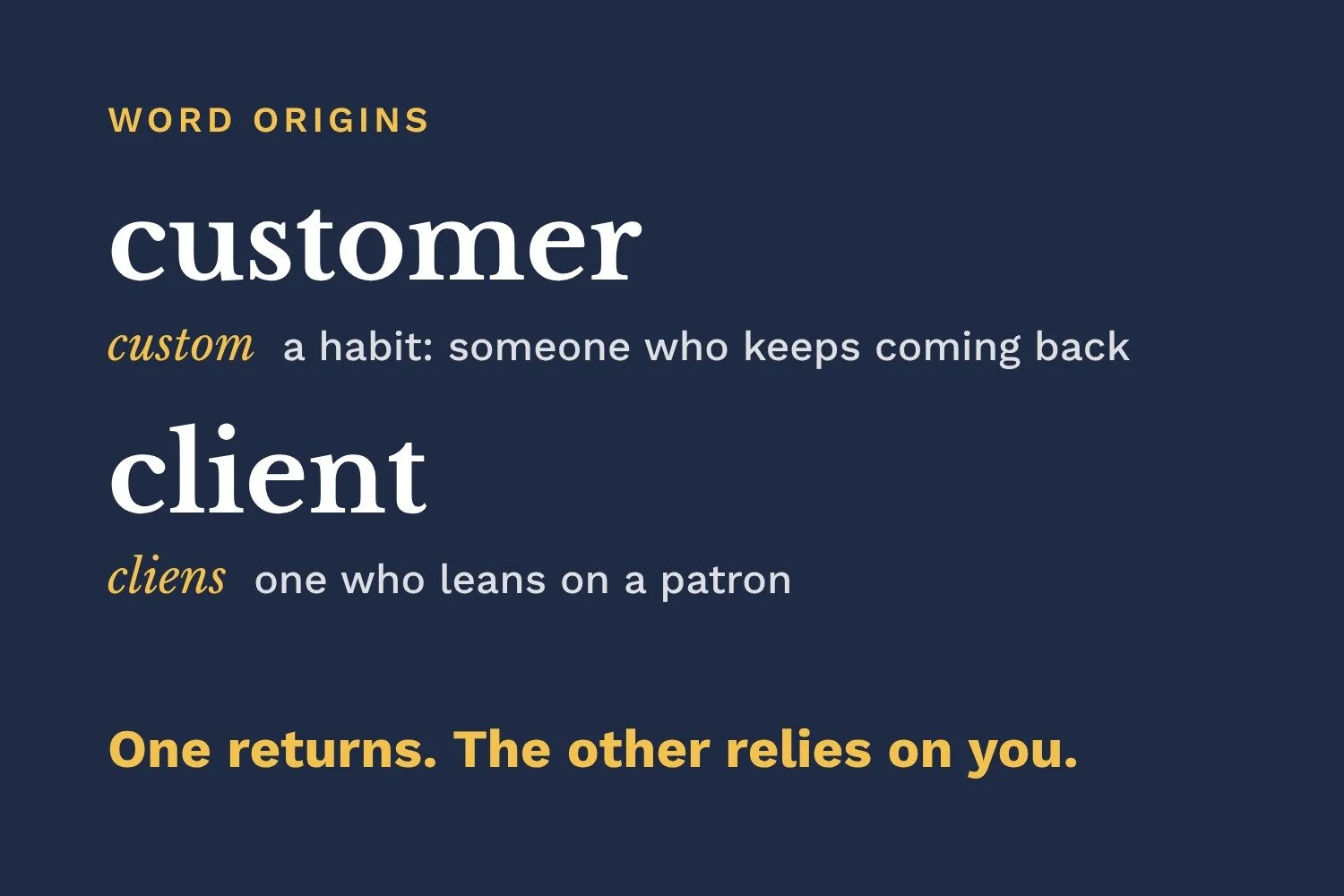
Customer or Client?
A customer is someone with a habit. A client, from the Latin cliens, is someone who leans on you. Here’s what the history of the two words says about the relationship you’re really offering.
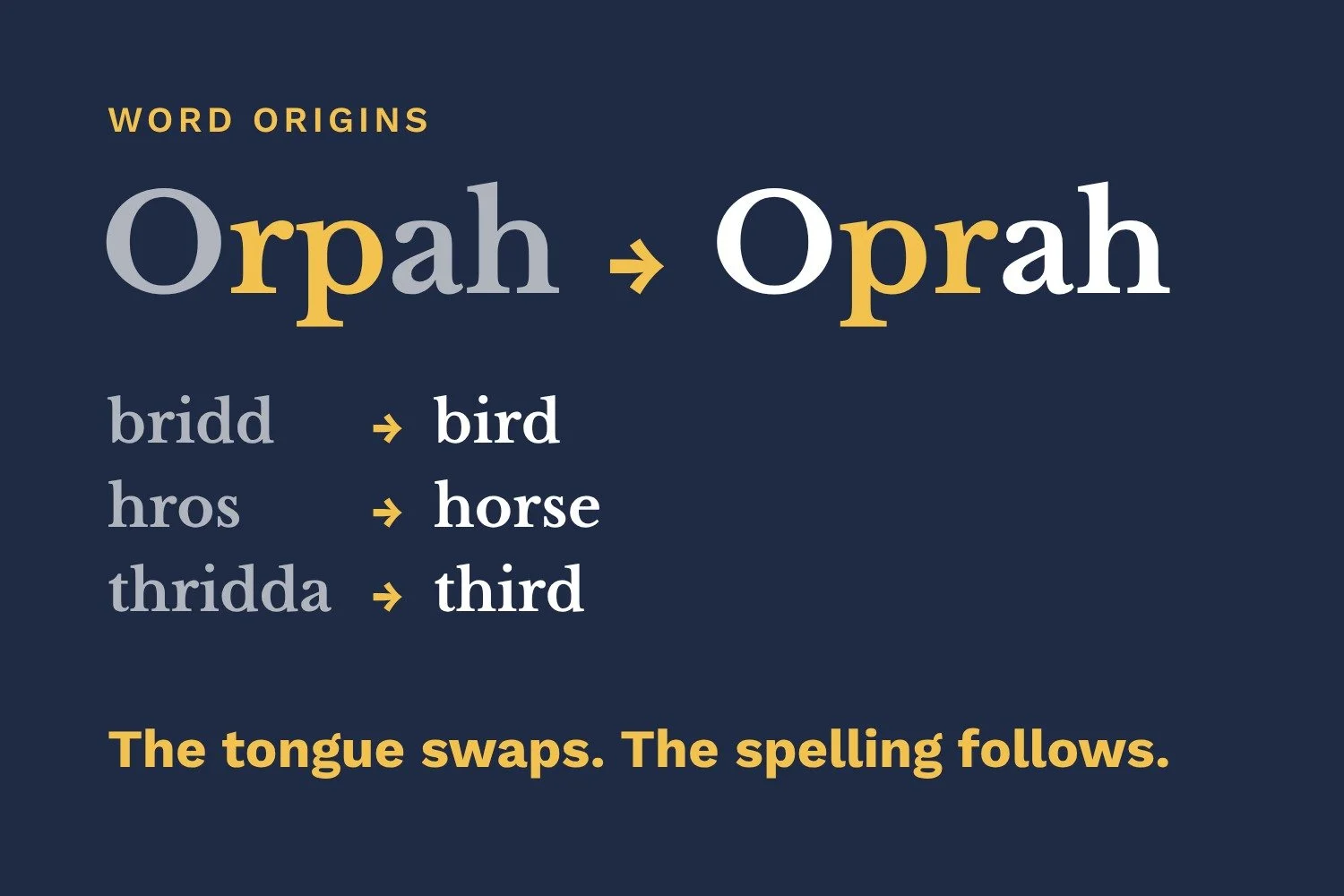
Oprah Was Spelled Right
Oprah Winfrey’s birth certificate says Orpah, spelled correctly after a woman in the Book of Ruth. People kept swapping the letters when they said it, and the new version won. It’s the same thing that gave us bird, horse and third, and why “aks” is older than you think.

Master of Ceremonies
The first Master of the Ceremonies was hired in 1603 to stop diplomatic incidents at the English court. Four hundred years later, the job's the same: make everyone else look good. Here's how.

Hypocrite Means Actor
In ancient Greek, a hypocrite was simply an actor. English kept the word and changed the job description. Here's what that tells leaders who think they need to play a part.

Blame Webster (Mostly)
Noah Webster gave America color, center and defense, and very nearly gave it tung, wimmin and masheen. But two spellings usually blamed on him aren’t his at all, and one of them is still used at Oxford.

The Biggest Village on Earth
In 1535, two young men told Jacques Cartier the way to their kanata, their village. He thought it was a name. Today that village covers almost ten million square kilometres, and it narrowly avoided being renamed Efisga.

Rare, This Order Is
Yoda’s word order is one of the rarest on Earth, and the few languages that use it cluster in the Amazon. But Yoda isn’t really speaking an exotic grammar. He’s doing something English speakers do every day, just constantly.

Why Love Means Nothing
In tennis, love means zero. It’s often credited to the French word for egg, but there’s no evidence for that. The real origin is a 17th-century bet, and it explains why English still treats anything you do for love as worth nothing.

Ms Is Older Than You Think
Ms wasn’t invented in the 1970s. It was proposed in 1901, and its two siblings were once the very same word.

The First “Australia” Wasn’t Here
The continent’s name comes from a Latin word for the south wind, a land nobody had seen, and a Spanish explorer’s pun on the Austrian royal family.

How a Tin of Ham Became Your Inbox
Spam is the only word I know that went from a pantry to a comedy sketch to every email server on earth, without ever really changing what it meant.

Pandemic, Epidemic, Endemic: A Word for All the People
In early 2020, people waited anxiously for the World Health Organization to say one word. It turned out to be a very old word, and a very democratic one.