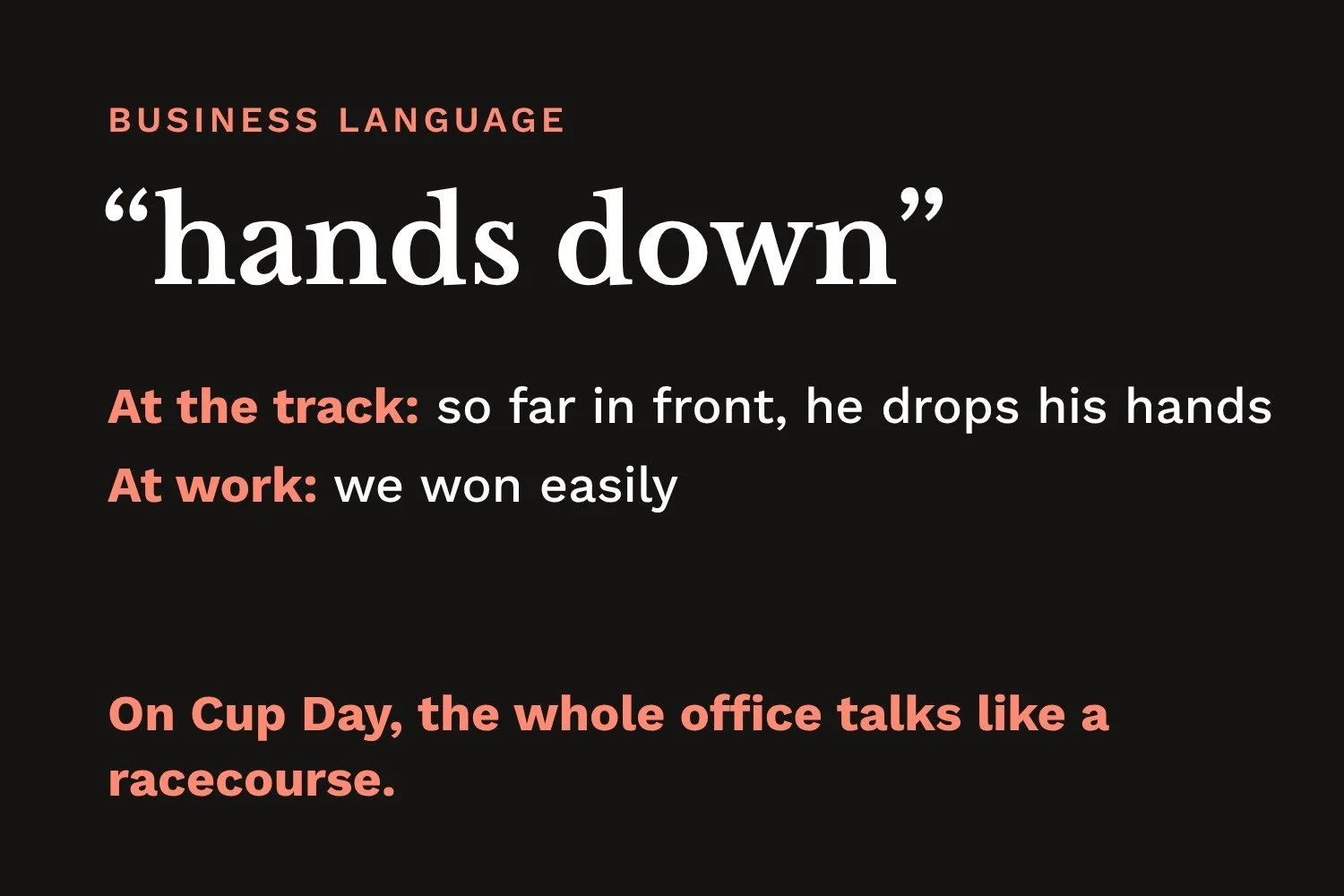
Hands Down
On Cup Day, the whole office talks about horses. The funny thing is that we’ve been doing it all year: front-runners, track records, dark horses, and winning hands down.

Non-Negotiable, Until Friday
Every October, safety is “non-negotiable”. Then it gets negotiated at 3pm on a Friday. Say what you’d give up for it instead.

Say It Once
Free gift, end result, advance planning. Business loves saying things twice. Here’s why the extra word costs more than you think.

Same Charge, Three Stories
A surcharge, a card recovery fee and a convenience fee can be exactly the same money. What changes is the story the word tells about who’s to blame.

Productivity Means Whatever You Need It To
Everyone agrees Australia needs more productivity. Economists, workers and business mean three different things by it, which is why the debate goes nowhere.

Announce First, Think Later
Two policies, one from each side of politics, both reversed within weeks. Neither failed because it was discussed. Each failed because the announcement was the first time anyone tested it.

The Announcement Wearing a Cardigan
An executive announces they’re leaving. The LinkedIn post starts “Hi all”, switches to legal disclosure language, then signs off “Cheers”. Here’s why the official announcement wearing a cardigan reads so oddly, and how to write a farewell in one voice.
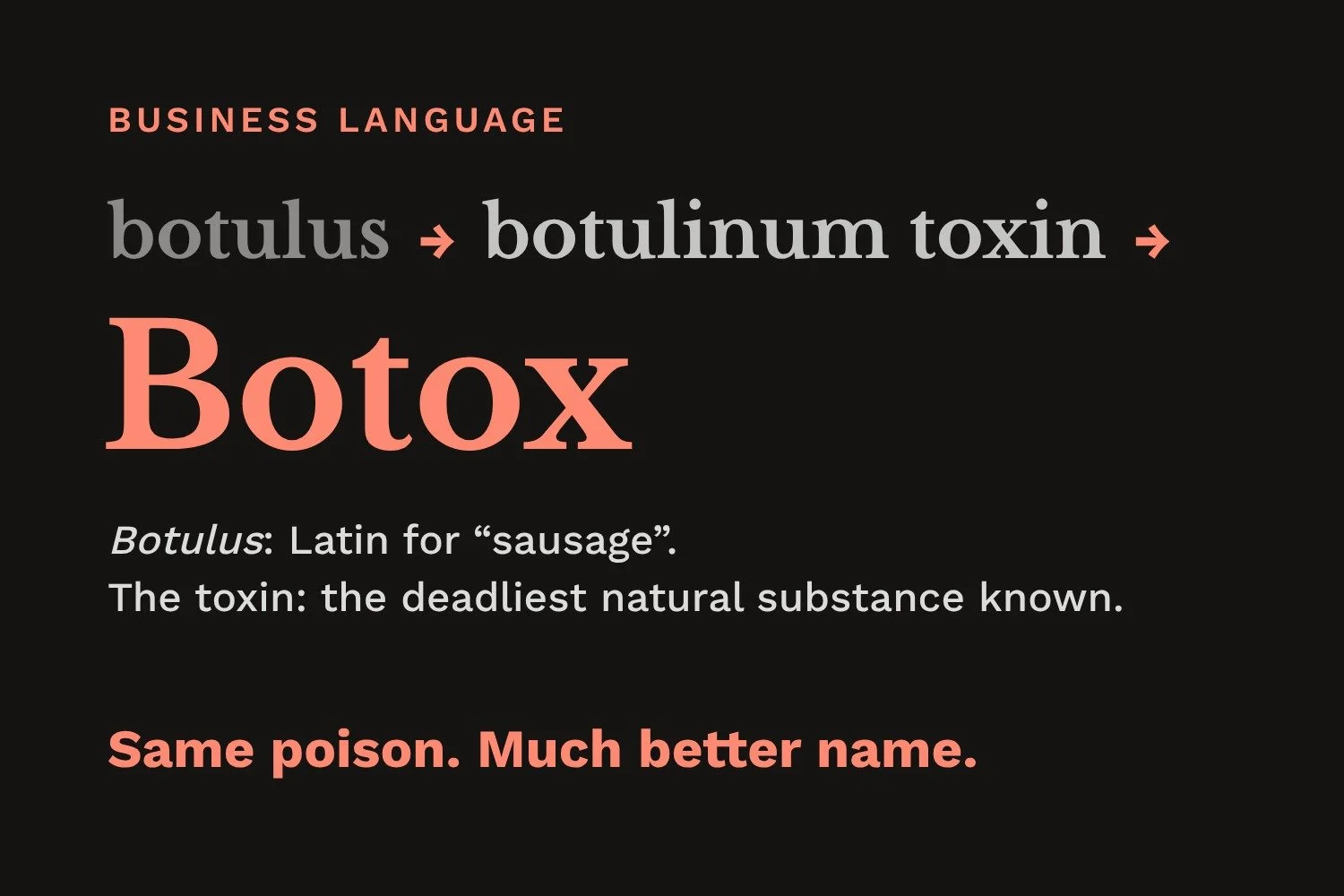
Sausage Poison, Rebranded
Botox comes from botulinum toxin, the deadliest natural substance known, and botulinum comes from the Latin for “sausage”. Here’s how a sausage poison got renamed into a household word, and what it teaches about naming.
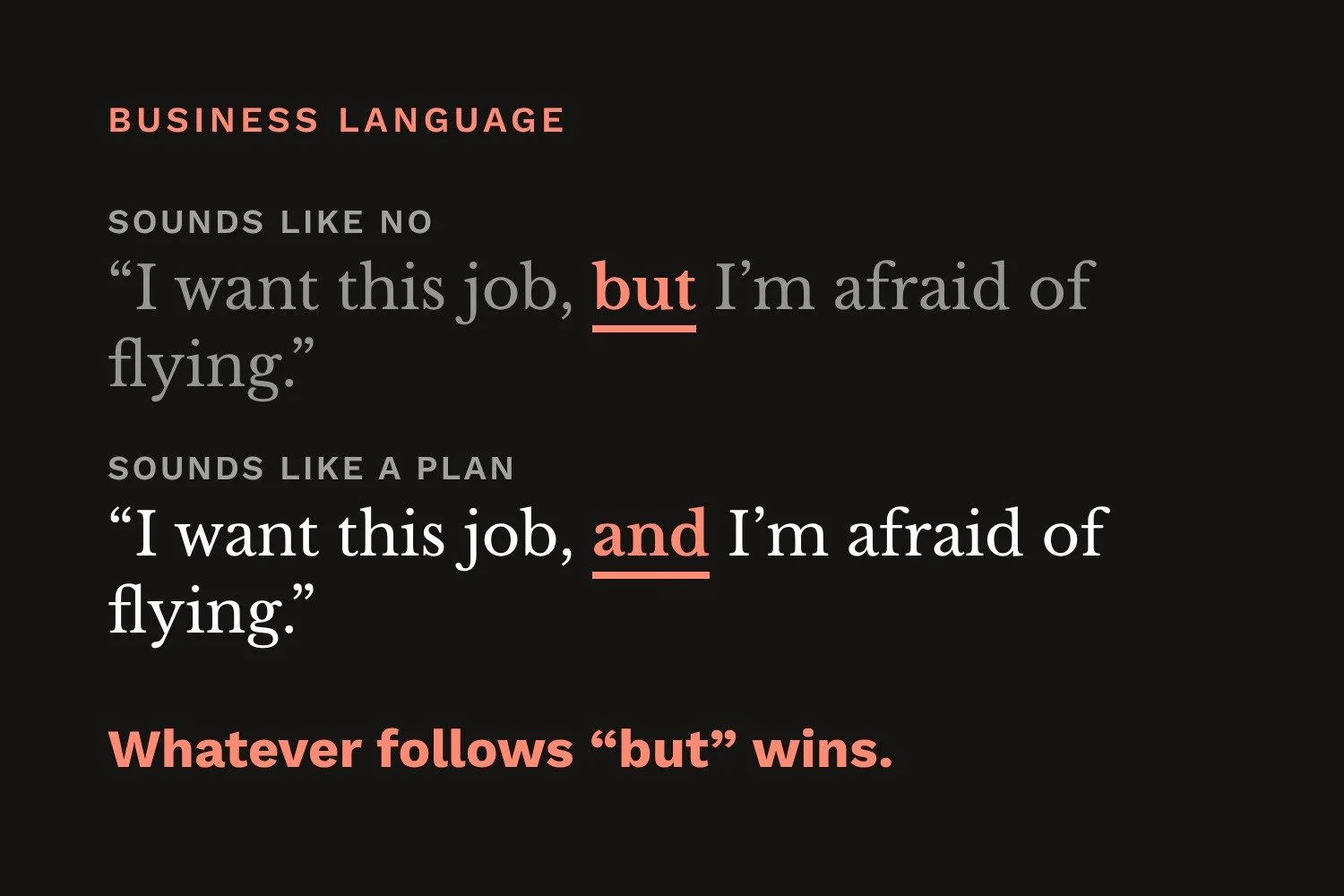
Everything Before the But
“I like it, but…” and nobody hears the first half. Whatever follows but wins, and the word has been doing that since Old English. Here’s what swapping but for and does to decisions, feedback and meetings.
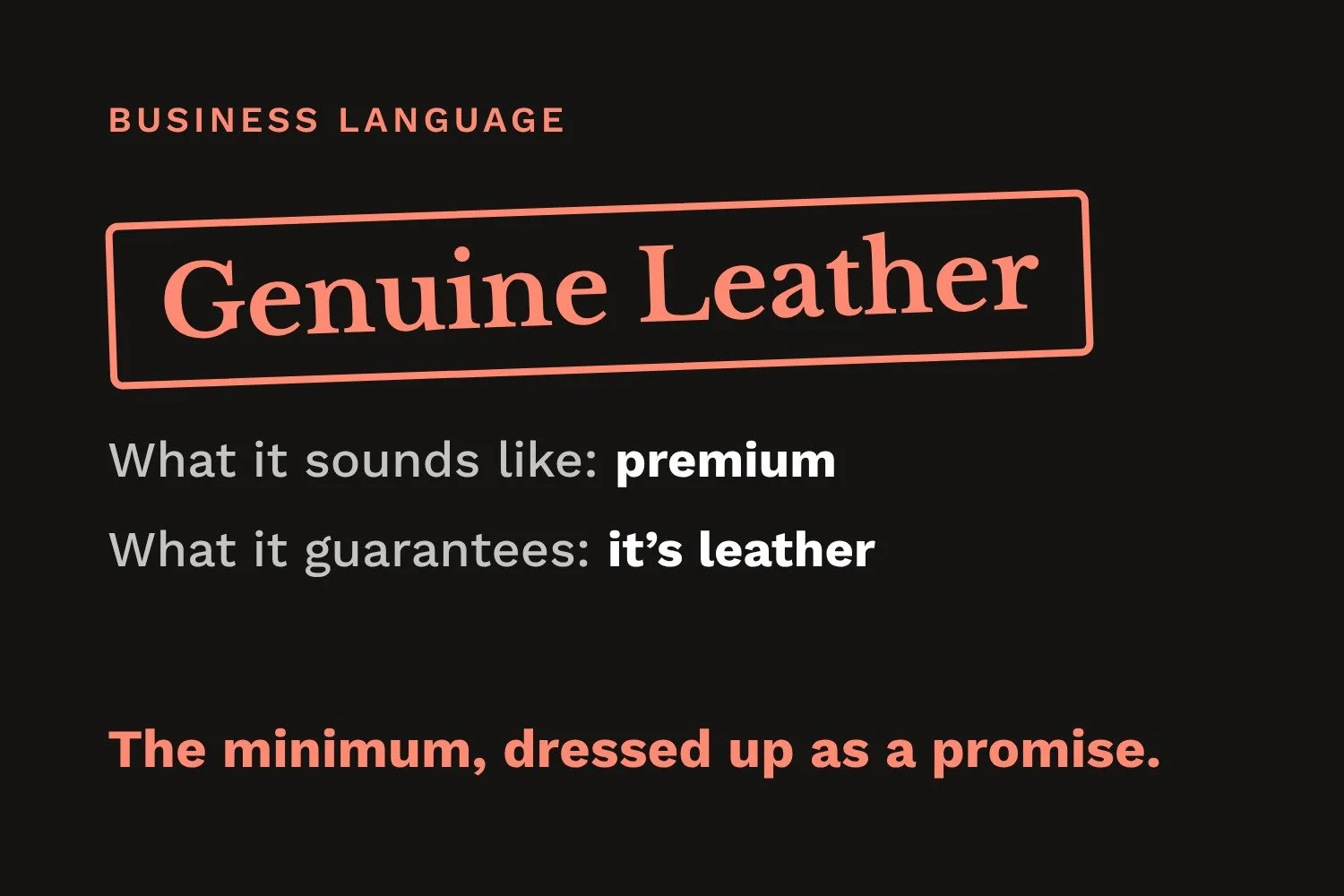
Genuine Isn’t a Grade
“Genuine leather” sounds like a mark of quality. It just means the product is leather, from the finest full grain to the cheapest coated split. Here’s what that stamp is really promising, and the business words that work the same way.
The Customer Is Always Right (and Other Things Nobody Said)
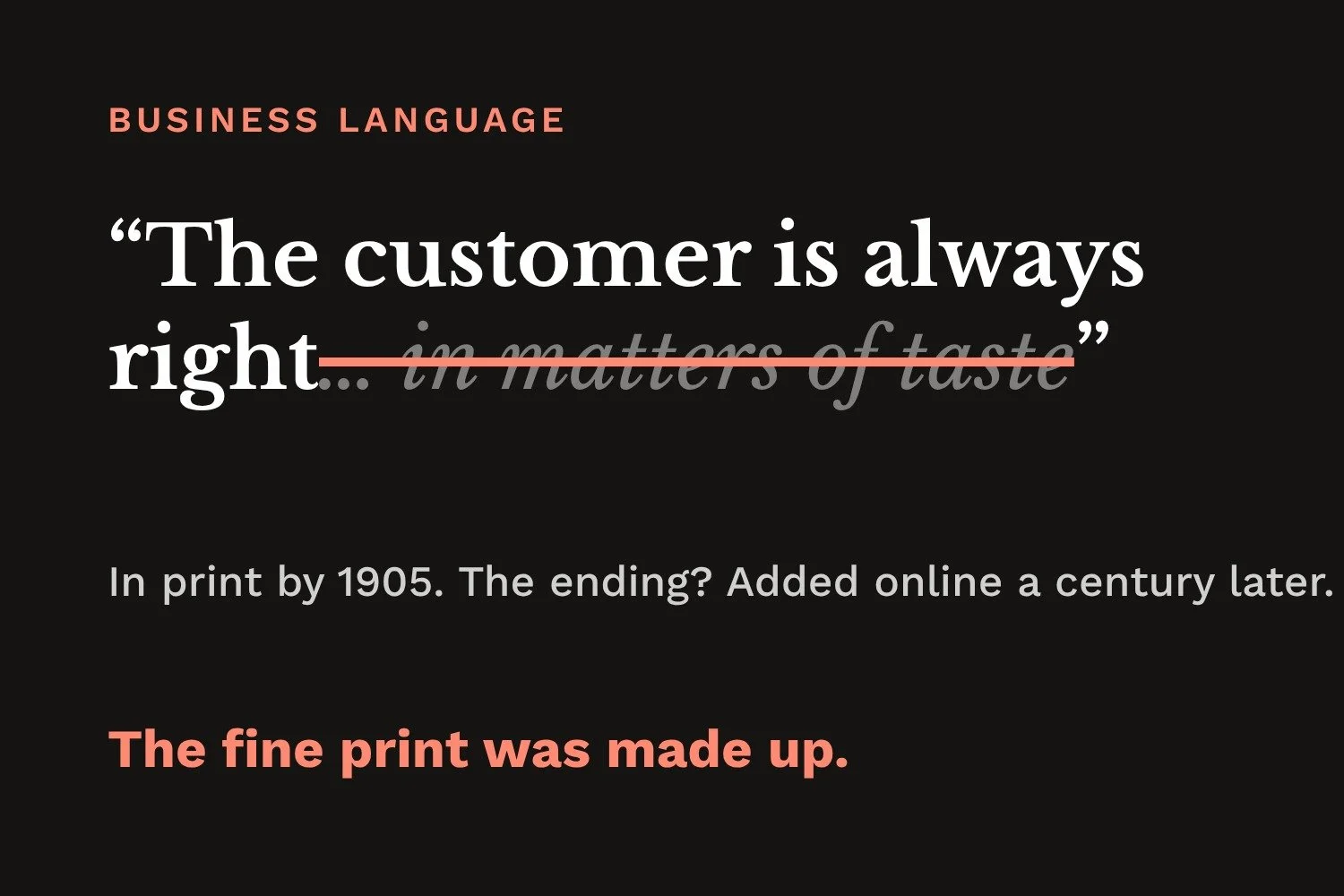
No, “the customer is always right” didn’t originally end with “in matters of taste”. That ending was invented online a century later. Here’s where the slogan really came from, what it actually meant, and why we keep rewriting phrases we’ve outgrown.
Gluten-Free Water
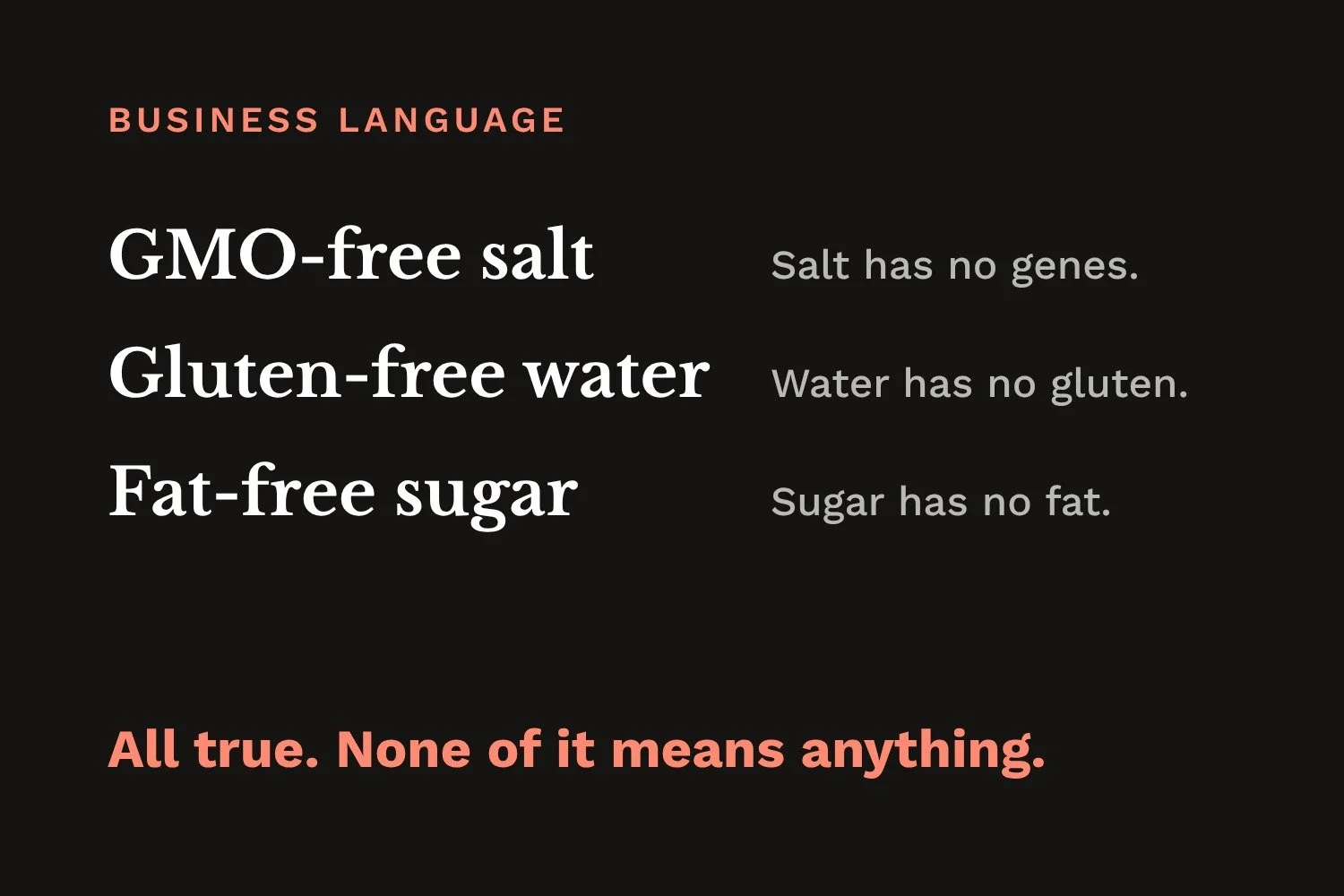
GMO-free salt. Gluten-free water. Fat-free sugar. Every word is true, and none of it means anything. Here’s why marketers love claims that tell you nothing, what the ACCC thinks of them, and how to tell when your own business is doing it.
Why It’s Not Called Alexis
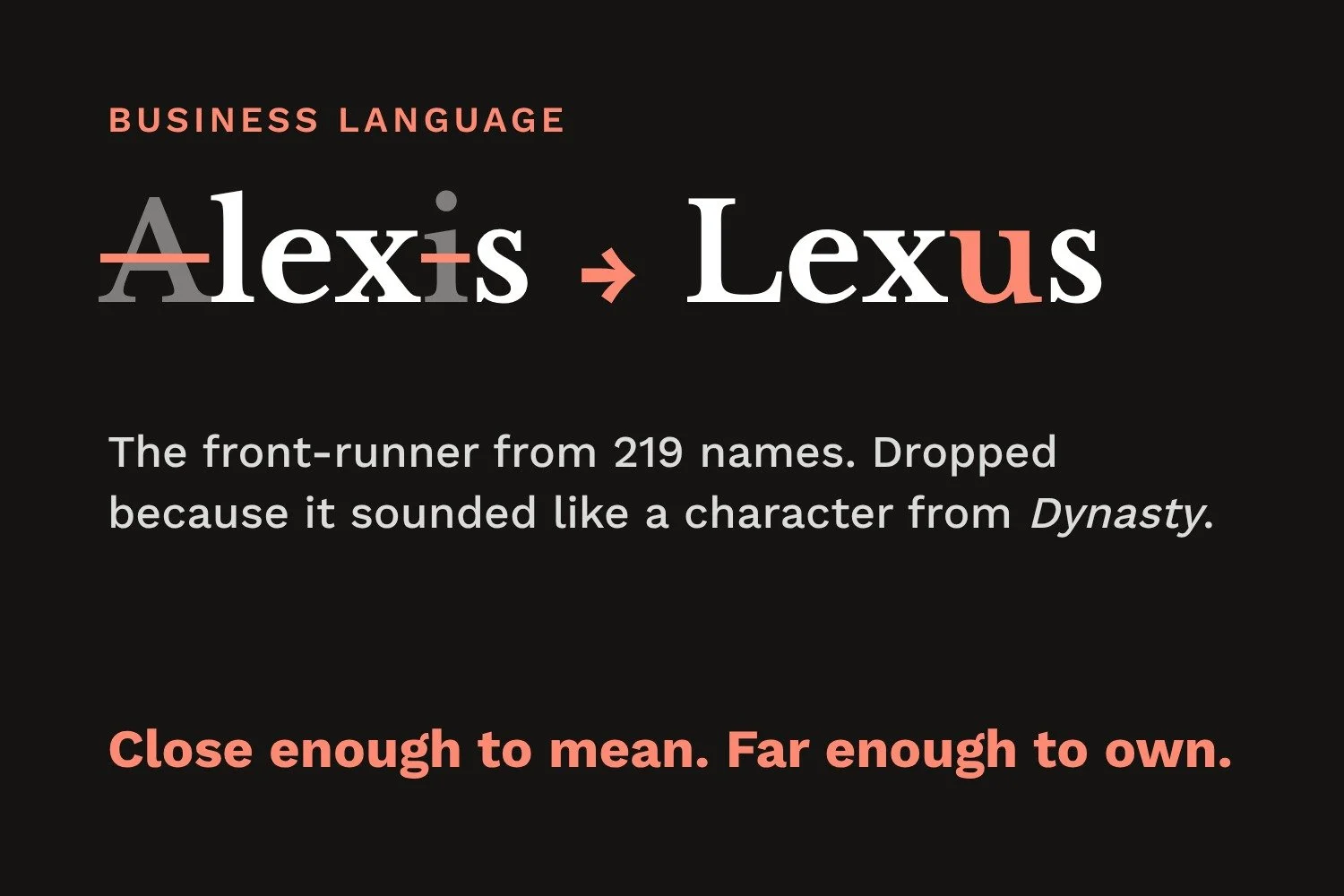
Toyota’s luxury car was nearly called Alexis, until someone realised it sounded like the villain from Dynasty. Dropping one letter and changing another gave us Lexus. Here’s what that teaches about naming, and why the “Luxury Exports to the US” story isn’t true.

Could Anyone Have Signed This?
Cover the signature on your last company-wide email. Could anyone tell it was yours? If not, here's why your message isn't landing, and four ways to put your voice back.

You Are Not Left-Brained
Left brain logical, right brain creative? A 2013 study of more than a thousand brain scans found no left-brained or right-brained people. Here's where the myth came from, and why labels like it do damage at work.

The Learning Styles Myth
Are you a visual learner? Probably not, because there's no good evidence that learning styles exist the way we think. Here's what the research says, and why the myth won't die.

Enron’s Values Were Excellent
Respect, Integrity, Communication, Excellence. They're good values, and they belonged to Enron. If your company's values could be swapped with theirs, here's the test, and the fix.

The Pinto That Never Went to Brazil
The Ford Pinto supposedly flopped in Brazil because of an unfortunate slang word. It never went there. But the Pinto did have a real language problem, and it's the one most organisations still have.

Unprecedented, Again
1918, 1957, 1968, 2009, 2020. Five pandemics in about a century, and every time we called it “unprecedented”. That one word turns a failure to prepare into bad luck, and it’s time we stopped letting it.

One Name Per Outcome
The dictionary’s oldest definition of “responsible” is “accountable”. So why do we insist they’re different? Because the moment two people are accountable for the same outcome, nobody is.